

Plant Medicine and Indigenous Traditions
Remembering Relationship Through the Living World
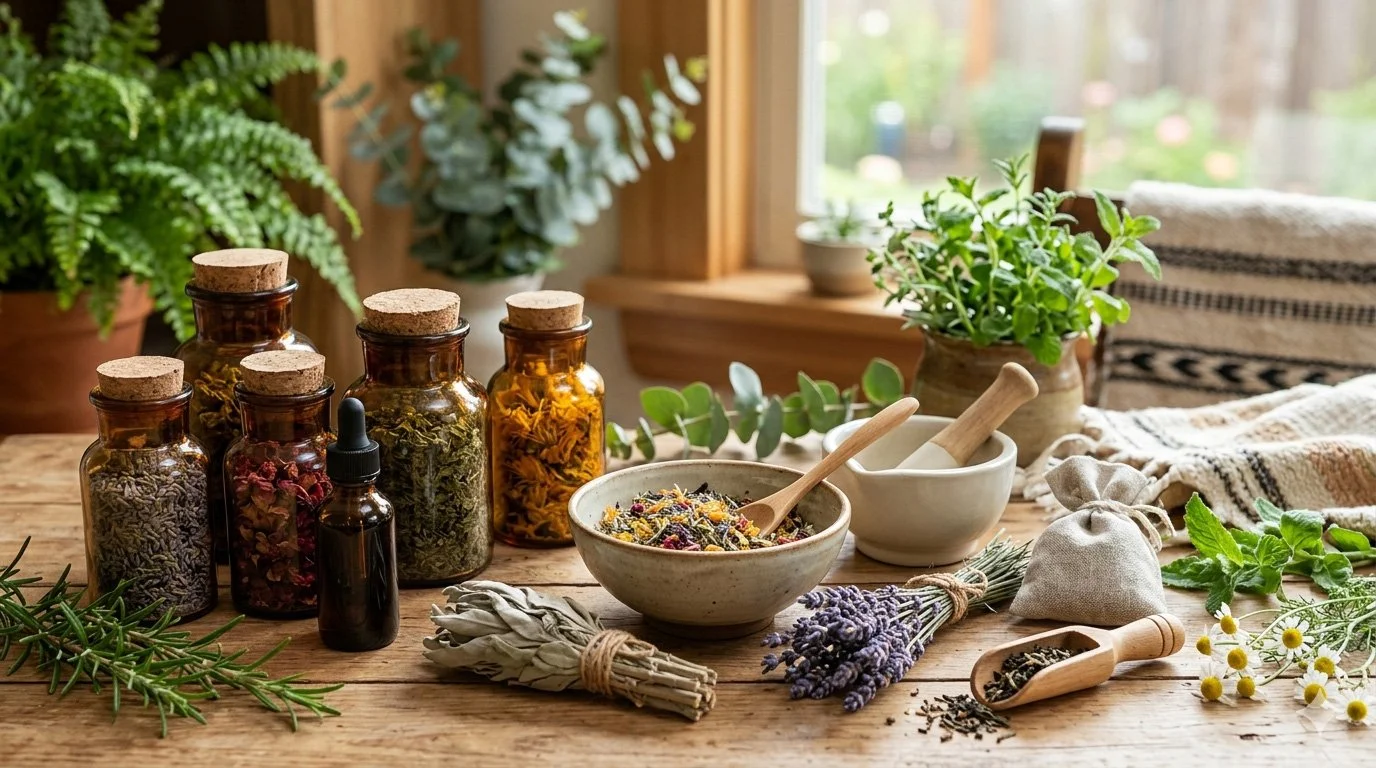
Across the world, Indigenous cultures have long understood plants as more than biological resources or chemical compounds. Plants have often been regarded as relatives, teachers, medicines, protectors, and living participants within the greater web of life. Within many Native American traditions, healing plants were traditionally approached through relationship, observation, ceremony, prayer, and deep ecological knowledge developed over countless generations. Medicine was not simply something consumed, but part of an ongoing exchange between human beings, the earth, and spirit.
Today, conversations surrounding plant medicine have entered mainstream culture in new ways. Interest in herbalism, traditional healing systems, ethnobotany, ceremonial medicines, and holistic wellness continues to grow. Yet as this interest expands, so does the need for care, context, humility, and respect toward the communities and traditions from which much of this knowledge originates.
At Kusala Healing Arts, the exploration of plant medicine is approached through the lens of relationship, mindfulness, and integrative healing rather than trend or commercialization. While this page is not intended as medical advice or ceremonial instruction, it offers a broader reflection on the role that plants have played within Indigenous understandings of health, balance, and human connection to the natural world.
Indigenous Views of Medicine
Modern industrial society often views medicine through extraction and isolation. A plant becomes reduced to an active ingredient, commercial product, or pharmaceutical derivative. While scientific analysis has contributed valuable understanding, many traditional cultures have historically approached healing through a far more relational perspective.
Within numerous Indigenous traditions, medicine may include physical healing, emotional support, spiritual guidance, ceremonial practice, community connection, and ecological awareness. Health is often inseparable from worldview. The gathering of a medicinal plant may involve prayer, offering, ethical harvesting, seasonal timing, and gratitude toward the life being taken. These practices reflect a philosophy rooted in reciprocity rather than simple consumption.
Rather than viewing nature as something to dominate or exploit, many Indigenous traditions emphasize participation within the living systems of the earth. Healing is not only about fixing symptoms, but about restoring harmony between the individual, the community, and the natural world.
The Wisdom of Observation
For thousands of years, Indigenous communities developed sophisticated understandings of medicinal plants through direct observation of the natural world. Knowledge was passed through oral traditions, apprenticeship, ceremony, storytelling, and lived experience across generations.
People observed how plants affected the body, where they grew, how preparation altered their potency, and how animals interacted with them in the wild. This process required patience, attentiveness, and long-term relationship with the environment.
Long before modern laboratories existed, traditional healers often understood which plants could support digestion, calm inflammation, reduce fever, assist wound healing, soothe emotional distress, or strengthen resilience. Many modern pharmaceuticals ultimately trace their origins to plant compounds first recognized through traditional use.
At the same time, Indigenous medicine has historically been about more than chemistry alone. Healing frequently included ritual, song, prayer, storytelling, symbolic meaning, and communal support. The medicine was not only the plant itself, but the context surrounding its use.Sound, Rhythm, and Ceremony
Throughout the world, Indigenous cultures have used sound as part of healing, prayer, remembrance, and ceremony for thousands of years.
Drumming, chanting, rattles, flutes, bells, vocalization, and repetitive rhythms have often served as ways to:
Calm the mind
Focus attention
Support communal bonding
Regulate emotional states
Encourage prayer or meditation
Accompany rites of passage
Create moments of stillness and reflection
Modern neuroscience increasingly recognizes what many traditional cultures already understood intuitively: rhythm and sound can profoundly influence the nervous system.
At Kusala Healing Arts, sound continues to play an important role within our broader philosophy of care through vibrational sound therapy, meditation practices, breath awareness, and contemplative listening.
At the same time, it is important to approach Indigenous sound traditions with humility and respect. Sacred songs, ceremonial practices, and traditional medicines are not simply aesthetic experiences or wellness trends. They belong to living cultures, living communities, and lineages that deserve care and ethical consideration.
Part of respectful learning involves understanding the difference between appreciation and appropriation.
Sacred Plants and Ceremony
Certain plants have held profound ceremonial importance within Native American traditions and continue to do so today. Depending on the nation or tradition, sacred plants may include tobacco, sage, cedar, sweetgrass, peyote, corn, juniper, and various local herbs and roots.
These plants are often approached with reverence and specific cultural protocols. Traditional tobacco, for example, has historically differed greatly from commercial tobacco products. In many Indigenous traditions, tobacco has been used ceremonially as an offering, prayer carrier, or symbol of communication and gratitude.
Similarly, sage and cedar may be used in purification practices, while sweetgrass is sometimes associated with kindness, harmony, and welcome. However, it is important to recognize that ceremonial uses of plants are not interchangeable across tribes or cultures. Native American traditions are extraordinarily diverse, and practices vary widely between nations and communities.
This diversity is often overlooked in mainstream conversations surrounding “Native spirituality,” which can unintentionally flatten many distinct cultures into a single generalized identity. Respect begins with recognizing complexity and honoring cultural boundaries.Walking Carefully and Respectfully
There is growing interest today in Indigenous healing practices, plant medicines, ceremonial traditions, and ancestral wisdom. While this interest can sometimes create meaningful opportunities for learning and cross-cultural respect, it can also create misunderstanding and commercialization.
Not every tradition is meant to be extracted, repackaged, or sold.
Not every sacred practice belongs in social media content or wellness branding.
Respect matters.
Context matters.
Relationship matters.
At Kusala Healing Arts, our intention is not to claim authority over Indigenous traditions or present ourselves as representatives of any one culture. Instead, we seek to remain students of relationship — learning from broader teachings surrounding mindfulness, balance, reverence for nature, contemplative listening, and the interconnectedness of life.
This orientation encourages humility.
It reminds us that healing is not always about mastery or performance. Sometimes it begins by listening more deeply — to the body, to silence, to breath, to community, and to the living world itself.
The Modern Return to Herbalism
In recent years, many people have begun returning to herbal medicine and plant-based wellness practices as interest grows in natural health, holistic living, nervous system support, and traditional healing systems. This renewed interest may reflect a deeper longing for reconnection in a world increasingly shaped by speed, technology, overstimulation, and disconnection from nature.
People are beginning to ask deeper questions about what has been lost through modern industrial life. What happens when human beings lose relationship with the earth? What wisdom existed before industrial medicine? How do plants support not only physical health, but emotional and spiritual balance as well?
For many individuals, herbalism becomes less about replacing modern medicine and more about restoring relationship and awareness. Simple practices such as drinking herbal teas, growing medicinal herbs, learning seasonal cycles, cooking with intention, or spending time outdoors can begin rebuilding this connection in meaningful ways.
Plant Medicine and the Nervous System
Modern life places extraordinary strain upon the nervous system through chronic stress, digital overload, isolation, disrupted sleep, and constant stimulation. As a result, many individuals experience persistent tension, anxiety, exhaustion, or emotional dysregulation.
Traditional healing systems often recognized the importance of calming the body and mind long before modern language surrounding trauma and nervous system regulation emerged. Many traditional plants have historically been used to support emotional well-being, resilience, and rest.
Today, people may explore supportive herbs such as chamomile, lavender, lemon balm, passionflower, skullcap, or oatstraw alongside mindfulness practices, meditation, bodywork, and contemplative disciplines.
At Kusala Healing Arts, this broader philosophy of calming, grounding, and supporting the nervous system continues to inform many aspects of the work, particularly through sound therapy, meditation, breath awareness, and hands-on therapies. Plant medicine may be viewed as one part of a larger relationship-based approach to healing.
Ethical Questions Around Plant Medicine
As plant medicine becomes increasingly commercialized, important ethical concerns continue to emerge. Questions surrounding sustainability, ecological depletion, cultural appropriation, exploitation of Indigenous traditions, and commercialization of sacred medicines have become increasingly relevant.
Some sacred plants are now endangered or heavily overharvested due to global demand. Additionally, certain ceremonial medicines carry deep cultural and spiritual significance that cannot simply be separated from their traditional contexts and repackaged into modern wellness culture.
Respectful engagement requires humility, education, ethical sourcing, and awareness of cultural boundaries. Not every teaching is meant for public consumption, and not every medicine belongs within a commercial framework. These distinctions matter deeply.
At its heart, Indigenous medicine often reminds people that healing is inseparable from responsibility. Relationship itself carries obligations — to the earth, to community, and to future generations.
Relationship as Medicine
Perhaps one of the most important lessons found within many Indigenous healing traditions is the understanding that relationship itself is medicine. Relationship to the body, to breath, to community, to ancestry, to the land, to sound, to silence, and to gratitude.
Modern culture often conditions people to search constantly for the next product, supplement, or solution. Yet many traditional teachings suggest that healing may begin not through endless consumption, but through restoring connection.
This does not require rejecting modern medicine. Rather, it encourages a broader understanding that health is multidimensional. A person may benefit from clinical care, nutritional support, bodywork, psychotherapy, mindfulness practices, herbal support, and spiritual grounding all at once. These approaches do not necessarily need to exist in opposition.
At Sacred Syllable and Kusala Healing Arts alike, there remains an ongoing interest in exploring how sound, contemplation, relationship, and traditional understandings of healing continue to inform modern life. The deeper lesson of plant medicine may not simply be what plants can do for us, but what they remind us about how to live.
To slow down.
To observe carefully.
To cultivate gratitude.
To listen more deeply.
And perhaps, in doing so, to remember our relationship with the living world once again.