
Plant Medicine and the Living World
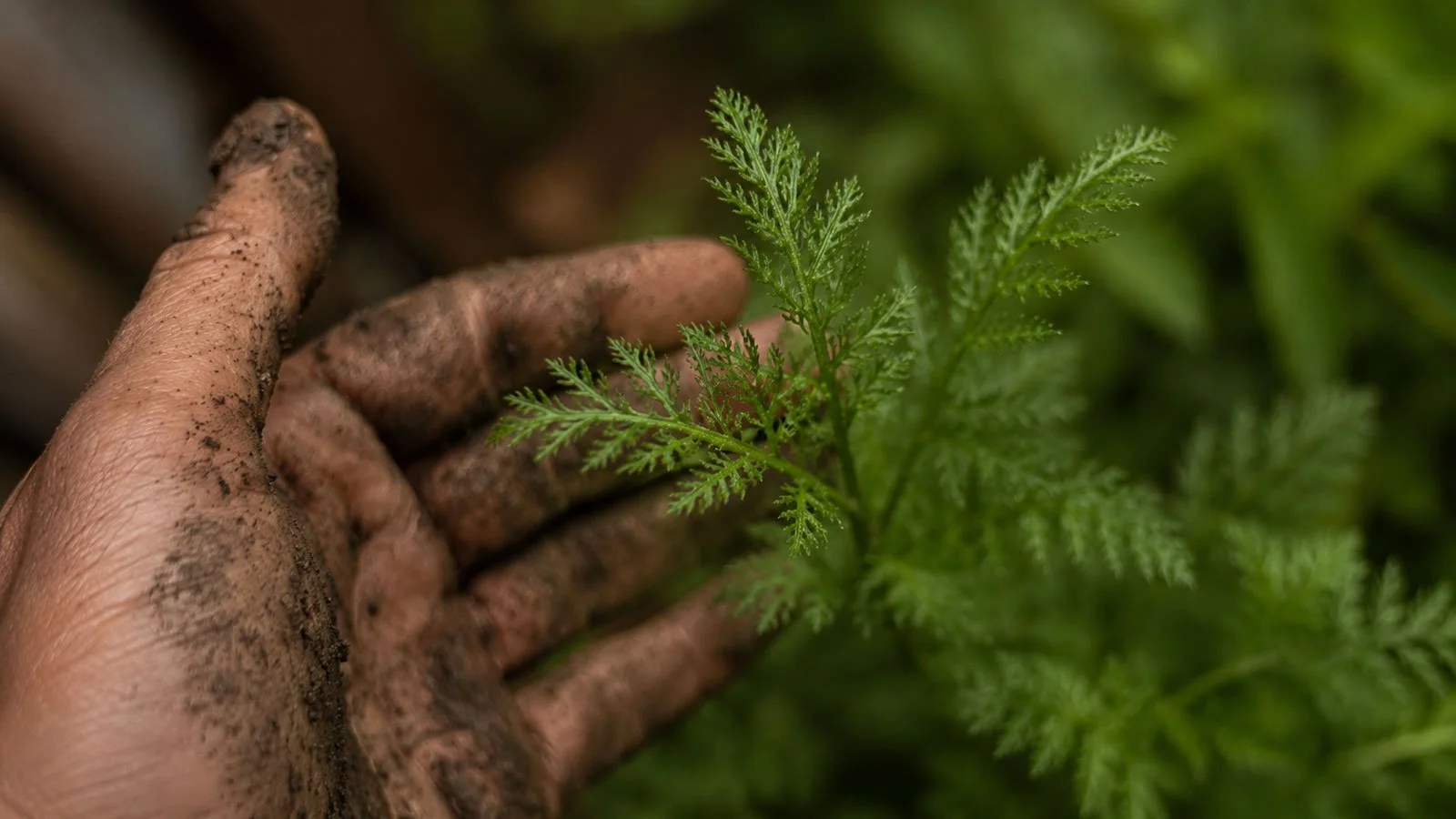
Before Medicine Was a Product
For most of human history, medicine wasn't something purchased or manufactured. It was something known — through generations of observation, relationship, and direct experience with the land. Within many Native American traditions, plants were approached not as raw material to extract from, but as relatives: teachers with their own protocols, timing, and reciprocal obligations.
That worldview stands in real contrast to how plant medicine is often discussed today, where interest in herbalism and traditional healing has grown quickly within mainstream wellness culture. Podcasts, supplement brands, and social media have all found their way into a conversation that, for most of its history, belonged to specific communities with specific protocols. At Kusala Healing Arts, this reflection is offered through a historical and relational lens rather than as instruction — an exploration of what these traditions can still teach about attention, humility, and healing understood as something larger than a product.
Knowledge Built Through Generations, Not Trials
Long before laboratories existed, Indigenous communities developed detailed understanding of medicinal plants through sustained, patient observation — passed down through oral tradition, apprenticeship, and lived experience rather than controlled experiment. This body of knowledge is often referred to today as Traditional Ecological Knowledge, or TEK: a cumulative, intergenerational understanding of the relationships between living beings and their environment.1
What set this knowledge apart wasn't only accuracy, though it was often remarkably precise. It was context. Healing frequently involved prayer, ethical harvesting, and specific protocol — the recognition that gathering a plant meant taking a life, and that taking required gratitude in return.2 Medicine, in this framework, was never separable from relationship.
Four Medicines, Countless Traditions
Among the plants held sacred across many Native American nations, four are especially widely recognized: tobacco, sage, cedar, and sweetgrass, often referred to together as the Four Sacred Medicines. Tobacco is traditionally offered first, used as a gift and a means of communication with the spirit world. Sage prepares people for ceremony and is used to clear what troubles the mind. Cedar is associated with purification and protection. Sweetgrass carries associations of gentleness and calm.3
It's worth being direct about something mainstream conversation often glosses over: there is no single "Native American tradition." These four medicines carry different meanings, placements, and protocols across different nations, and treating them as interchangeable — or treating "Native spirituality" as one generalized belief system — flattens traditions that are, in reality, remarkably diverse. Respect starts with holding that complexity rather than smoothing past it.
Where Modern Medicine Quietly Borrowed
The line between "traditional" and "modern" medicine is thinner than it's often presented. Roughly 40 percent of pharmaceutical products in use today draw, directly or indirectly, from nature and traditional knowledge.4 The antimalarial drug artemisinin is a well-documented example — identified after researcher Tu Youyou turned to a centuries-old reference to sweet wormwood within traditional Chinese medical texts, after conventional compound screening had failed.4
This history rarely gets acknowledged in the marketing of the resulting drugs. But it's a useful reminder that traditional knowledge systems weren't primitive precursors to real medicine — they were, and remain, a legitimate body of understanding that modern pharmacology has quietly and repeatedly drawn from.
The Line Between Learning and Taking
As plant medicine has grown more visible in wellness culture, genuine ethical concerns have followed. Researchers use the term biopiracy to describe the commercial appropriation of biological resources and the traditional knowledge attached to them — often without any benefit returning to the communities who developed and protected that knowledge over generations.2 Certain ceremonially significant plants are now genuinely at risk, overharvested to meet demand that has little relationship to the traditions the plants come from.
These aren't abstract concerns. A plant that once required specific harvesting seasons, ethical protocol, and community stewardship can, once commercialized, be stripped of all of that context — sold as an ingredient with none of the relationship that originally gave it meaning. The result isn't only ecological strain. It's a kind of quiet erasure, where a tradition's depth gets replaced by a product's convenience.
Not every tradition is meant to be extracted, repackaged, or sold, and not every sacred practice belongs in wellness branding. Learning about a tradition and claiming authority over it are two very different things, and the space between them is where respect either holds or doesn't.
Reaching for the Garden Again
In recent years, many people have returned to herbal and plant-based practices, drawn by interest in natural health and a broader wariness of how disconnected modern life has become from the land. That return often reflects something deeper than trend-chasing — a genuine longing for reconnection in a world shaped by speed and overstimulation.
It raises questions worth sitting with. What was understood about health before pharmacology existed as a discipline? What gets lost when relationship to land is replaced by convenience? For many people, herbalism becomes less about replacing modern medicine and more about restoring a felt sense of connection — through unhurried, ordinary practices like tending a garden or learning seasonal rhythms. None of that requires expertise in traditional systems to be meaningful. It mostly asks for patience.
The Practice Underneath the Practice
Perhaps the deepest lesson within these traditions is that relationship itself functions as medicine — relationship to the body, to breath, to community, to land, and to gratitude. Modern culture often conditions people to search for the next product or protocol promising resolution. Many traditional teachings point somewhere quieter: healing beginning not through consumption, but through restoring connection to what's already present.
This isn't offered as a replacement for modern medicine, nor does it require rejecting it. A person may benefit from clinical care, bodywork, nutrition, and contemplative practice all at once, without those approaches standing in opposition to one another. What plant medicine traditions seem to offer, at their core, isn't a set of remedies to extract and repackage — it's a broader invitation: to slow down, to observe carefully, to hold gratitude as part of the practice rather than an afterthought, and to remember that the living world was never separate from the work of healing in the first place.
None of this asks a person to become an expert in traditions they weren't raised in, or to perform a relationship to the land they haven't actually built. It asks something smaller and more honest — to approach these traditions as a student rather than a consumer, and to let that posture shape how the learning is carried forward.
At Kusala Healing Arts, that broader view continues to shape an integrative approach to care — not looking to these traditions for products to borrow, but for what they still have to teach about attention, humility, and the relationships healing actually depends on.
This reflection on plant medicine sits alongside our broader exploration of Indigenous healing traditions at Kusala Healing Arts.
Sources
- ↩ "Traditional ecological knowledge." Wikipedia. en.wikipedia.org/wiki/Traditional_ecological_knowledge
- ↩ "Toward An Ethics of Reciprocity: Ethnobotanical Knowledge and Medicinal Plants as Cancer Therapies." Religions/MDPI. mdpi.com/2076-0787/3/4/624
- ↩ "Four sacred medicines." Encyclopaedia Britannica. britannica.com/science/four-sacred-medicines
- ↩ "Traditional medicine has a long history of contributing to conventional medicine and continues to hold promise." World Health Organization. who.int — traditional medicine feature story