
Reincarnation and the Soul's Journey Across Traditions
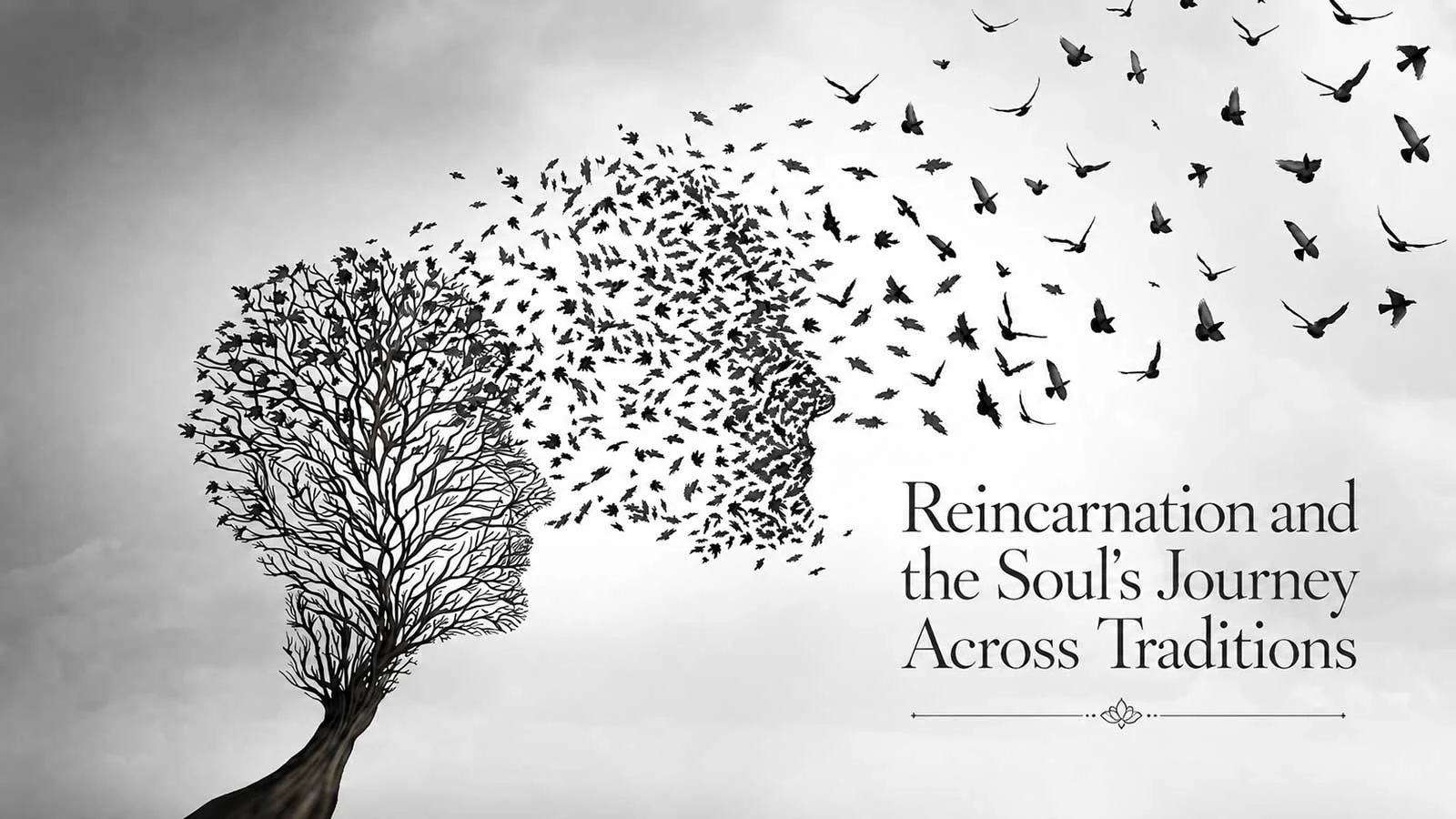
What Our Past Lives May Carry Into This One
There's a question that seems to surface in nearly every quiet moment of reflection: what happens to us when we die? For millions of people across thousands of years, one answer has offered both comfort and challenge — the idea that we don't just live once, but many times. That the soul, or some essential part of who we are, moves through cycles of birth, death, and rebirth, carrying forward the imprints of what came before.
This is reincarnation. And whether you approach it as literal truth, sacred metaphor, or a lens for understanding your own life more deeply, it's a concept worth sitting with. At Kusala Healing Arts, we find that exploring these ideas — with curiosity rather than certainty — often opens doors in a healing journey that logic alone can't reach. One thread that runs through many of these traditions, and that we find especially worth pausing on, is the idea that how a life ends may shape what comes after it, just as much as how it was lived.
A Thread Woven Through Many Traditions
Reincarnation isn't owned by any single culture. It appears, in different forms, across the world's contemplative traditions, each offering its own texture and meaning — and many of them pay close attention to the moment of death itself, not just the life that preceded it.
In Hinduism, the soul, or atman, is understood as eternal and unchanging, moving through countless lifetimes in a cycle called samsara. The quality of each incarnation is shaped by karma — the accumulated weight of one's actions, intentions, and choices. But tradition also holds that the state of mind at the moment of death carries particular weight. The Bhagavad Gita suggests that whatever a person is deeply absorbed in as they die tends to shape what follows — a teaching that has long encouraged practices of conscious, peaceful dying as a spiritual discipline in its own right.
Buddhism, particularly in its Tibetan forms, developed this idea into an entire body of teaching. The Bardo Thodol — often translated as the Tibetan Book of the Dead — describes an intermediate state between death and rebirth, in which consciousness passes through a series of visions and choices before settling into a new incarnation. A sudden or violent death is traditionally understood to disrupt this passage differently than a peaceful one, sometimes leaving consciousness disoriented or more strongly pulled by fear and craving in its next arising. This is part of why Tibetan Buddhist practice places such emphasis on the art of dying consciously, and why prayers and rituals for the recently deceased are considered so important — they're meant to steady a transition that might otherwise be turbulent.
In Vietnamese folk religion and Đạo Mẫu (the Mother Goddess tradition), the manner of death carries deep social and spiritual significance. A death considered "good" — peaceful, at the right time, surrounded by family — allows a spirit to settle properly into the ancestral fold, where it can be honored and remain in relationship with the living. A "bad death" — sudden, violent, far from home, or unaccompanied by proper ritual — is often believed to leave a spirit restless or wandering, in need of special rites to help it find peace. Practices like Lên Đồng, spirit mediumship, sometimes serve exactly this function: tending to spirits whose passing was difficult, so that they, and the living who remember them, can find resolution.
Ancient Egyptian cosmology took the moment of death and its aftermath perhaps more seriously than any other tradition, building an entire theology around it. The heart of the deceased was believed to be weighed against the feather of Ma'at — truth and balance — in the Hall of Judgment. But before that judgment, considerable importance was placed on how the body and spirit were prepared through mortuary ritual, including the Opening of the Mouth ceremony, which was believed to restore the senses and allow the deceased to continue on. A death without proper rites, in this worldview, risked leaving a soul unable to complete its journey at all.
Even in the West, similar intuitions surface. Greek mythology held that souls who died without proper burial rites wandered the banks of the Styx, unable to cross into the underworld. Many Indigenous cosmologies around the world likewise distinguish between a death that is "completed" through ritual and community, and one that leaves something unresolved — a distinction that shapes how the spirit is believed to continue.
What's striking isn't that these traditions agree on the mechanics. They don't. What's striking is how many independent cultures arrived at a shared intuition: that death is not a single instant, but a threshold — and that how we cross it may matter as much as how we lived up to it.
Why This Ancient Idea Still Resonates
You don't have to adopt a specific doctrine to find value in these teachings. Many people find that reincarnation — even held loosely, as a possibility rather than a certainty — reframes how they relate to their own mortality, their grief for others, and the unfinished stories they carry.
It offers language for deaths that feel unresolved. Many of us carry grief for a loved one whose passing was sudden, difficult, or far from peaceful. These traditions don't erase that pain, but they offer something many people find comforting: the idea that ritual, remembrance, and intention offered after a difficult death can still matter — that the story isn't simply cut off.
It reframes "dying well" as a practice, not just an outcome. Traditions that link the state of mind at death to what follows tend to treat dying itself as something worth preparing for — through meditation, through settling old business, through cultivating peace rather than fear. That reframing can be meaningful long before death is close at hand.
It can illuminate patterns that feel older than this life. Some traditions suggest that unresolved endings — abrupt losses, unfinished business, deaths marked by fear or violence — can leave an imprint that carries forward. You don't need to take that literally to find the framework useful. Sometimes recognizing that a fear or a pattern might be "old," rather than something to solve alone in this lifetime, creates enough distance to begin healing it.
Reincarnation and the Healing Journey
This is where these ancient ideas meet the modern practice of integrative healing. In our work at Kusala — through sound healing, meditation, and hands-on therapy — we often see how deeply the body holds what the mind hasn't yet processed. Some of this is clearly traceable to this lifetime: trauma, loss, moments that ended abruptly or without closure. Many traditions would recognize this immediately; they've long taught that unresolved endings, of all kinds, ask for tending.
For our veterans healing services in particular, these teachings often resonate in ways that are hard to put into words. Many traditions around the world have long held that sound, chant, rhythm, and ritual are among the most powerful tools for helping a person — living or passed — move through what a difficult ending has left behind. You don't have to believe in past lives or literal rebirth to benefit from this work. The nervous system responds to vibration, breath, and presence regardless of the metaphysical frame you bring to it. But there is something quietly powerful in traditions that treat endings — even hard ones — as passages that can still be honored, settled, and carried forward with care.
Holding the Question Gently
Perhaps the most honest thing we can say about reincarnation, and about what any of us carries from one chapter into the next, is that no one knows for certain — and that uncertainty is not a problem to be solved but a space to be explored. What these traditions share is a quiet insistence that endings matter, that how we meet them shapes what follows, and that even a difficult passing is not beyond the reach of care.
At Kusala Healing Arts, we don't ask you to believe anything in particular. We simply offer space — through sound, through stillness, through touch — for whatever needs to move, to move. Sometimes that's grief from this lifetime. Sometimes it's something older, or something unfinished. Either way, the invitation is the same: to trust that healing, like the soul's journey itself, may unfold across more than one chapter.