
The Spiral of Time — Shamanism, Energy Medicine, and Non-Ordinary Reality
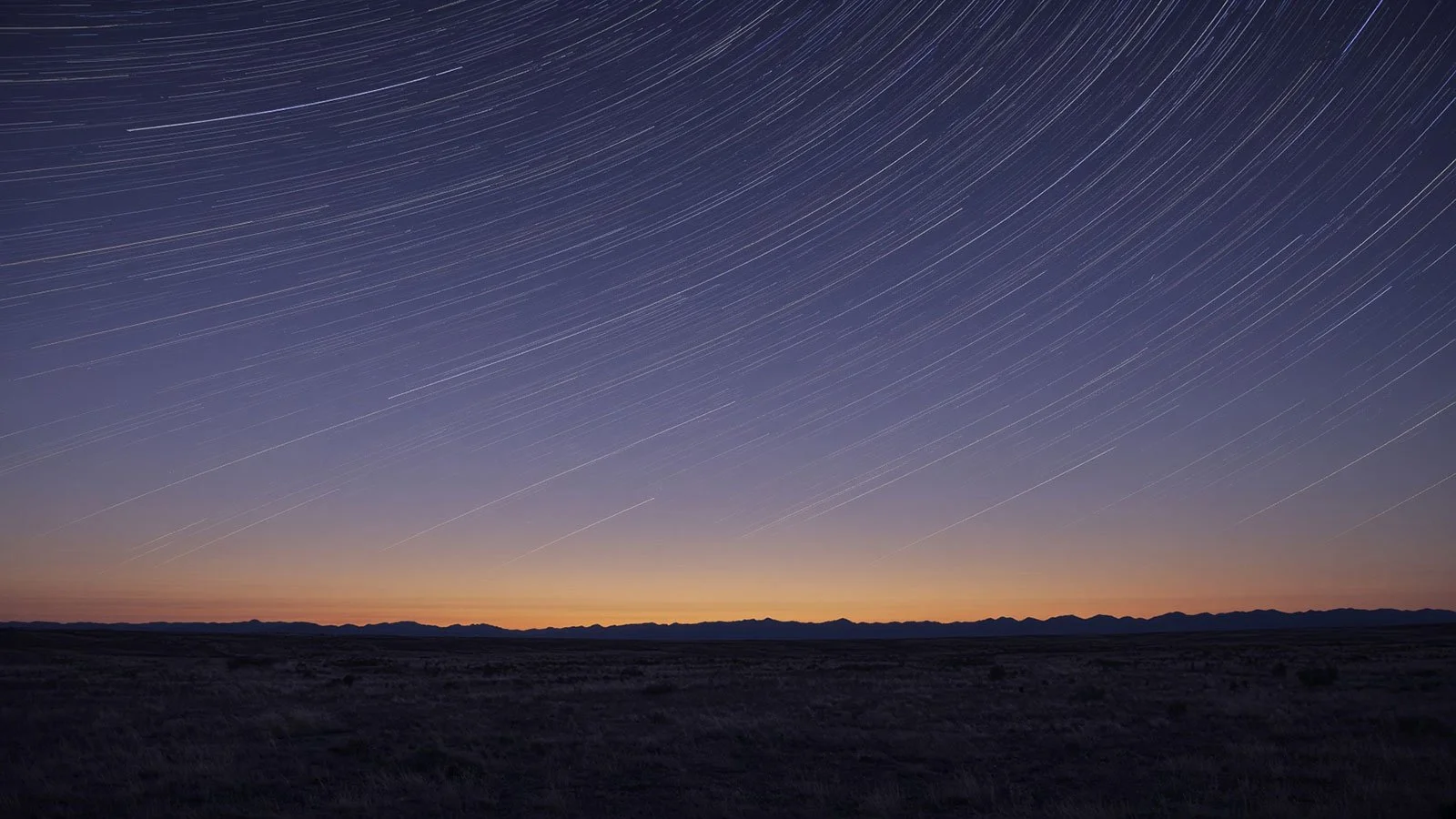
Most of us live inside one idea of time and rarely notice it. Time is a line, the clock measures it, and a good life means keeping pace. Many healing traditions begin from a different place. In their practice, time can slow, fold back, deepen, or hold still, and that shift is often where the healing happens. This post follows the thread through shamanism, energy medicine, and non-ordinary reality, and it offers one image to carry along the way: time as a spiral.
The Clock Is Newer Than It Feels
The sense that time is a neutral, measurable line is a surprisingly recent habit. Historian E. P. Thompson traced how, in industrializing England, the clock moved from household convenience to instrument of work discipline.1 Before that, labor followed tasks and seasons, a rhythm Thompson called task-orientation. You worked until the job was done, and then you stopped.
Afterward, time became something an employer bought by the hour. That history loosens the clock's authority a little. The line isn't wrong, but it is a cultural choice, and a choice can be set down now and then.
Not a Circle, Not a Line
You will often read that Indigenous peoples experience time as a circle. There is something true in that, wrapped in a lot of flattening. Indigenous traditions are many, and their ideas about time are not one idea.
The best-known example is the Hopi. In the 1940s, linguist Benjamin Lee Whorf argued that Hopi had no words or grammar for time. Ekkehart Malotki's 1983 study documented hundreds of Hopi expressions of temporal relations and put the claim to rest.2 The image of a people outside time is a myth, and it endures because it is romantic and repeatable.
A richer example comes from Australia. Anthropologist W. E. H. Stanner, writing about the Aboriginal Dreaming, observed that it cannot be fixed in time. It "was, and is, everywhen."3 Here the past is not behind you. It is underfoot, still shaping the present.
That is neither a straight line nor a closed circle, and it is where the spiral earns its place. A spiral comes back to the same season, the same grief, the same question, but each pass sits at a different height. I offer it as a working image rather than an ancient doctrine.
This matters for healing because it changes what a return means. When grief resurfaces on an anniversary, the line says you have failed to move on. The spiral says you have come around again, and you may be able to meet it differently this time.
What Happens to Time in Non-Ordinary Reality
The phrase non-ordinary reality is common in modern shamanic circles, and it points at something people report across cultures. During deep meditation, rhythmic drumming, fasting, breathwork, or plant medicine ceremony, the ordinary sense of duration loosens. Minutes stretch. Hours vanish. Past and present can feel strangely close. In many traditions, such moments are treated as encounters with another mode of perception rather than as fantasy.
Neuropsychologist Marc Wittmann argues that our sense of time and our sense of self are closely bound, and that in meditation, intoxication, and extremity, they can dissolve together.4 The laboratory points the same way. In a double-blind study, psilocybin disrupted volunteers' ability to reproduce intervals longer than two to three seconds, while shorter ones were largely spared.5 One way to read this is that time is partly something the self does, a running commentary that keeps "me" pinned to a moment. Quiet the commentary, and time changes texture.
Drumming is the classic doorway, and the research is worth knowing. In an fMRI study of fifteen experienced practitioners, drumming-induced trance came with stronger hub activity in regions tied to inward attention, and weaker connection along the auditory pathway, as if the brain were turning inward and tuning out the beat.6
A separate experiment found that fifteen minutes of either drumming or meditation music lowered cortisol. What differed was experience. Participants told to journey reported heaviness, a slowed heartbeat, and dreamlike imagery more often than those told to relax.7 The rhythm relaxed people. The frame shaped the journey.
One caution belongs here. The drum journey taught in many workshops is core shamanism, a cross-cultural method anthropologist Michael Harner presented in 1980. It has been enormously influential, and it has drawn criticism, including from communities he learned from.8 It is not the same thing as any single Indigenous practice.
Where the Past Stays Present
In many shamanic frameworks, an old wound does not stay in the past. Grief, ancestral patterns, and sudden shocks are treated as living presences, and healing work aims to change a person's relationship to them. Soul retrieval, the calling back of a fragmented part of the self so it can rejoin the present, is one familiar expression.
Clinical psychology arrives somewhere similar by another road. In Ehlers and Clark's influential model, PTSD persists when traumatic memories are poorly elaborated and poorly placed in context, so the past keeps arriving as a sense of current threat.9 The memory has not yet been filed under "then."
One plausible reading is that a ritual container can help give an old event a place, a witness, and a time. That work belongs with trained, trauma-informed practitioners.
Medicine Keeps Time
Energy medicine does not treat time as a metaphor. It treats it as a clinical variable. The second chapter of the Huangdi Neijing's Suwen tells the reader how to live in each season so that qi stays in step with the year. Winter calls for early rest and late rising. Spring calls for early rising and long strides.10 Another passage, Lingshu 44, folds a whole year into a single day: morning is spring, midday is summer, evening is autumn, and midnight is winter.11
Ayurveda does something similar. Its classical texts describe dinacharya, the daily routine, and ritucharya, the seasonal one.12 Across these systems the shape repeats. A day echoes a year, and cycles sit inside larger cycles. That is the spiral again, drawn in the language of medicine.
This is not only an Eastern habit. The first Hippocratic aphorism carries three references to time: the brevity of a life, the fleeting moment for intervening, which the Greeks called kairos, and the difficulty of judging under pressure.13 Greek and Roman physicians watched for critical days and timed treatment to the right moment. The clock counts minutes. Kairos asks whether this is the moment.
Practicing With the Spiral
If time is partly a matter of attention and rhythm, it can be practiced. A few ways in, none of them exotic, and none requiring a lineage or a drum.
- Borrow a season. Let the time of year set your pace. Rest more in winter, begin things in spring.
- Use rhythm. Slow drumming, humming, or counted breath gives attention something steady to rest on.
- Let the narration thin. Sit with one sound until the running commentary loosens.
- Ask the spiral question. Where have I been here before, and what is different this time?
- Mark the return. When an old feeling comes back, jot down the date and what has changed since it last visited.
Try one small experiment. Sit with a steady sound for five minutes, guess how long it lasted before you look at a clock, and notice the gap. Over a few weeks, the gap tells you something about where your attention has been living.
None of this asks you to abandon the clock. Linear time gets us to appointments, and it gets people to the hospital. It is one layer of a larger experience. The traditions above simply remember that there are other layers, and that returning to them, through drum, breath, season, or silence, can be a form of care. The spiral doesn't replace the line. It gives the line somewhere to return.
This piece continues from our look at perception, energy, and the invisible landscape of healing, and from earlier explorations of plant medicine and the living world and Indigenous medicine and whole-person healing, each widening the frame we usually live inside.
Sources
- ↩ Thompson, E. P. (1967). "Time, Work-Discipline, and Industrial Capitalism." Past & Present, 38(1), 56–97. doi.org/10.1093/past/38.1.56
- ↩ Malotki, E. (1983). Hopi Time. Mouton. ac.nau.edu/~malotki/html/hopi_time_reviews.html
- ↩ University of Sydney. (2016). "Unique Indigenous art exhibition seizes more than the moment." University of Sydney News. sydney.edu.au
- ↩ Wittmann, M. (2018). Altered States of Consciousness: Experiences Out of Time and Self. MIT Press. mitpressbookstore.mit.edu/book/9780262546089
- ↩ Wittmann, M., et al. (2007). "Effects of psilocybin on time perception and temporal control of behaviour in humans." Journal of Psychopharmacology, 21(1), 50–64. doi.org/10.1177/0269881106065859
- ↩ Hove, M. J., et al. (2016). "Brain network reconfiguration and perceptual decoupling during an absorptive state of consciousness." Cerebral Cortex, 26(7), 3116–3124. doi.org/10.1093/cercor/bhv137
- ↩ Gingras, B., Pohler, G., & Fitch, W. T. (2014). "Exploring shamanic journeying: Repetitive drumming with shamanic instructions induces specific subjective experiences but no larger cortisol decrease than instrumental meditation music." PLOS ONE, 9(7), e102103. pmc.ncbi.nlm.nih.gov/articles/PMC4085008
- ↩ "Michael Harner." Wikipedia. en.wikipedia.org/wiki/Michael_Harner
- ↩ Ehlers, A., & Clark, D. M. (2000). "A cognitive model of posttraumatic stress disorder." Behaviour Research and Therapy, 38(4), 319–345. pubmed.ncbi.nlm.nih.gov/10761279
- ↩ Unschuld, P. U., & Tessenow, H. (2011). Huang Di nei jing su wen: An Annotated Translation of Huang Di's Inner Classic – Basic Questions. University of California Press. muse.jhu.edu/book/26200
- ↩ "Time & transitions." acupuncture.org.uk. acupuncture.org.uk/?p=49054
- ↩ "Concept of Vihara (Lifestyle)." Vikaspedia (Ayush). en.vikaspedia.in
- ↩ "Kairos, Krisis, Rhythmos." Alexander von Humboldt Professorship, Humboldt-Universität zu Berlin. klassphil.hu-berlin.de