
Power Animals, Animal Guides, and Archetypal Energies
Reconnecting With the Natural World
Many people today feel disconnected from nature, even while spending most of their lives surrounded by it. Daily life moves quickly. Phones, social media, constant stimulation, and endless information can make it difficult to slow down and listen inwardly.
Yet throughout human history, people looked to the natural world not only for survival, but for wisdom, symbolism, healing, and guidance. Animals became part of stories, ceremonies, dreams, meditation, and spiritual practice. They reflected qualities humans recognized within themselves: strength, instinct, adaptability, sensitivity, courage, patience, and transformation.
Today, people use different terms to describe these symbolic relationships with animals. Some speak of power animals, others prefer animal guides, spirit allies, or archetypal animal energies. While the language varies, the core idea remains similar: certain animals seem to carry symbolic meaning that reflects inner growth, emotional states, personal transformation, or deeper aspects of human consciousness.
For some people, these experiences feel spiritual. For others, psychological or symbolic. And for many, the experience exists somewhere between the two.
What Are Animal Guides or Power Animals?
A power animal or animal guide is often understood as an animal presence that appears symbolically, emotionally, spiritually, or intuitively during different stages of life.
These experiences can happen through dreams, meditation, creative practice, emotional transitions, synchronicities, or repeated encounters with certain animals in nature or daily life. A person may begin noticing the same animal appearing repeatedly during a difficult period, major life change, or time of personal reflection.
Someone moving through emotional healing may feel drawn toward bears, whales, or deer. Someone learning boundaries and independence may connect strongly with wolves. Others may repeatedly encounter birds during periods requiring perspective, change, or clarity.
Some people believe these animals carry spiritual intelligence or guidance. Others understand them as archetypal symbols emerging from the subconscious mind. Either way, the relationship often becomes meaningful because it encourages deeper self-awareness and reflection.
Rather than rigid definitions, animal guides can become mirrors that help people better understand themselves and their relationship with the world around them.
Archetypal Animal Energies
Animals have carried symbolic meaning across cultures for thousands of years. Long before modern psychology existed, humans recognized patterns in nature and connected certain animals with specific qualities or lessons.
Snakes became associated with transformation because they shed their skin. Owls became linked with intuition and nighttime awareness. Bears reflected healing, rest, and protection. Wolves symbolized instinct, loyalty, and social intelligence. Eagles represented vision and expanded perspective.
Swiss psychologist Carl Jung referred to these recurring symbolic patterns as archetypes — universal images and energies that appear throughout dreams, myths, religion, storytelling, and the subconscious mind.
In this sense, animal guides may not simply represent something external. They may also reflect inner qualities that are emerging, healing, developing, or asking for attention.
The wolf may symbolize reconnecting with instinct.
The snake may represent transformation.
The deer may reflect emotional sensitivity and awareness.
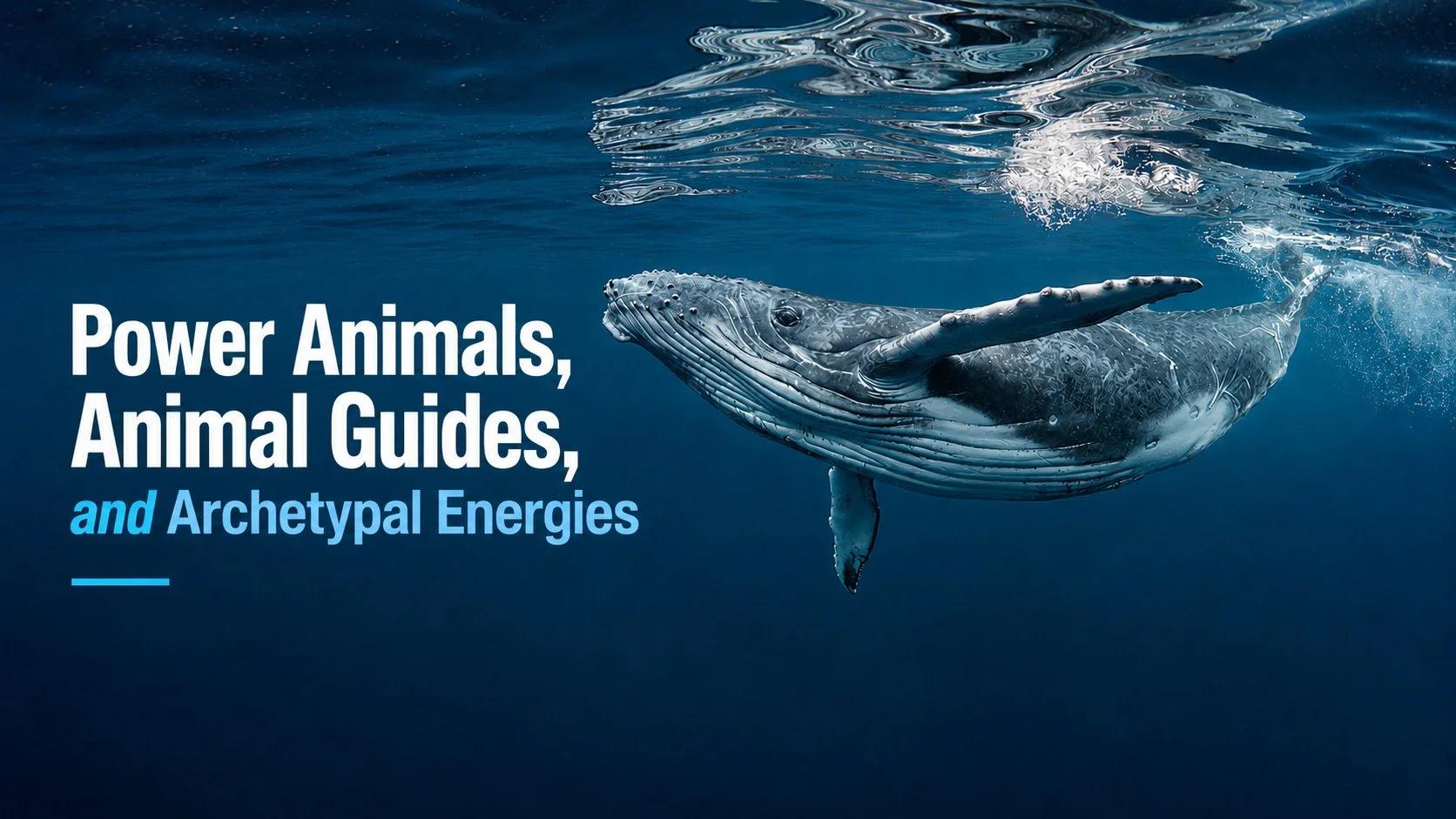
The whale may point toward emotional depth and introspection.
These symbolic relationships often become powerful because they help people reconnect with parts of themselves that modern life tends to suppress or overlook.
Core Shamanism and Modern Practice
One modern approach that introduced many people to journey work and power animals is the work of Michael Harner.
Harner spent years studying shamanic practices among Indigenous cultures around the world. Through his research, he noticed that many traditions shared similar methods involving drumming, altered states of awareness, symbolic imagery, healing, and connection with helping spirits or animal energies.
Rather than attempting to copy one specific Indigenous tradition, Harner developed what became known as Core Shamanism — a simplified framework focused on universal practices found across many shamanic systems.
For many people born outside Indigenous tribes, ceremonial cultures, or ancestral spiritual lineages, Core Shamanism became one of the more accessible entry points into contemporary shamanic practice. Instead of claiming tribal identity or attempting to imitate sacred ceremonies belonging to specific cultures, Core Shamanism generally focuses on rhythmic drumming, symbolic exploration, and relationship with nature and inner experience.
This approach often includes practices such as:
• Rhythmic drumming
• Shamanic journeying
• Dreamwork
• Symbolic reflection
• Connection with power animals or helping spirits
For many modern practitioners, Core Shamanism serves as a contemplative bridge — one that allows individuals to reconnect with intuition, symbolism, nature, and inner transformation while still maintaining respect for Indigenous traditions and their cultural origins.
The Shamanic Journey
One of the central practices within Core Shamanism is known as the shamanic journey.
During a journey, a person enters a relaxed state, often while listening to repetitive drumming or rhythmic sound. The steady rhythm helps quiet ordinary mental activity and allows symbolic imagery to emerge more freely.
A person may visualize entering a cave, forest path, riverbank, tunnel, or other opening in nature. From there, the experience unfolds naturally.
Some people encounter power animals almost immediately. Others spend time exploring symbolic inner landscapes before any clear imagery appears.
An animal guide may communicate through emotion, presence, movement, instinctive understanding, or symbolic imagery rather than spoken language. Often, the experience feels emotionally vivid and personally meaningful regardless of whether the individual interprets it spiritually or psychologically.
The purpose is generally not to force an experience, but to remain open, attentive, and reflective.
Common Animal Guides and Symbolism
Wolf
The wolf is often connected with instinct, loyalty, intelligence, and the balance between independence and community. People drawn toward wolf energy are sometimes learning to trust themselves more deeply or reconnect with intuition and inner strength.
Bear
The bear commonly symbolizes healing, introspection, protection, and rest. Bear energy often appears during periods of emotional recovery or personal transformation, reminding people of the importance of slowing down and restoring balance.
Snake
Snakes are strongly associated with transformation, renewal, healing, and rebirth. Because they shed their skin, snake energy often appears during periods of major life change, growth, or emotional transition.
Owl
Owls are frequently linked with intuition, hidden knowledge, and the ability to see clearly through uncertainty. Owl energy may emerge during times requiring deeper insight or self-reflection.
Deer
The deer symbolizes gentleness, awareness, emotional sensitivity, and grace. Deer energy often reflects quiet intelligence and the ability to move through life with attentiveness and care.
Eagle and Hawk
Eagles and hawks are commonly associated with perspective, focus, clarity, and expanded awareness. These birds often symbolize the ability to see the larger picture and move through life with stronger direction.
Swan
The swan is often connected with grace, intuition, transformation, creativity, and emotional depth. Swans symbolize the balance between beauty, sensitivity, and hidden strength. Their ability to move between water, land, and sky has also linked them with emotional awareness and spiritual growth.
Dreams, Synchronicity, and Symbolic Encounters
Many people begin exploring animal guides after unusual or repeating experiences involving certain animals.
An animal may appear repeatedly in dreams, meditation, artwork, music, conversations, or unexpected encounters in daily life. Sometimes these moments feel strangely meaningful or emotionally charged.
Carl Jung described these types of meaningful coincidences as synchronicities — experiences connected through symbolic meaning rather than direct cause and effect.
Whether viewed spiritually or psychologically, these encounters often invite deeper self-reflection.
The important part is usually not proving the experience intellectually, but paying attention to how it influences awareness, emotional growth, healing, creativity, or perspective.
Respecting Indigenous Traditions
As interest in shamanism, animal guides, and spiritual symbolism has grown online, it is important to approach these topics respectfully.
Many Indigenous cultures hold sacred ceremonial traditions connected to animals, ancestors, healing, and relationship with the land. These practices are deeply tied to lineage, community, and culture.
Core Shamanism developed partly as a way for non-Indigenous practitioners to explore universal shamanic methods without directly copying or claiming tribal identities or sacred ceremonial systems.
That distinction matters.
A grounded approach involves humility, study, listening, discernment, and respect for cultural origins rather than turning spiritual practice into performance, escapism, or identity.
Nature itself remains available as a teacher.
Relearning How to Listen
At its heart, working with animal guides or archetypal energies is often less about escaping reality and more about becoming fully present to it.
Modern life conditions people to move quickly and disconnect from silence, instinct, reflection, and the natural world. Practices such as meditation, dreamwork, journaling, contemplative walking, and symbolic exploration can help people slow down enough to reconnect with themselves again.
Sometimes a power animal becomes part of that process.
Not necessarily as a magical answer, but as a symbolic relationship that helps a person better understand their inner life, emotional landscape, strengths, fears, and patterns of growth.
The animal becomes a reminder:
To trust instinct.
To rest when needed.
To adapt through change.
To listen more deeply.
To reconnect with nature and self.
And sometimes, through dreams, meditation, synchronicities, or quiet moments outdoors, people begin remembering that human beings were never truly separate from the living world around them.